- +91 77888 64446
- A 241,Upper Ground Floor, Supermart 1, DLF Phase 4, Gurugram, India
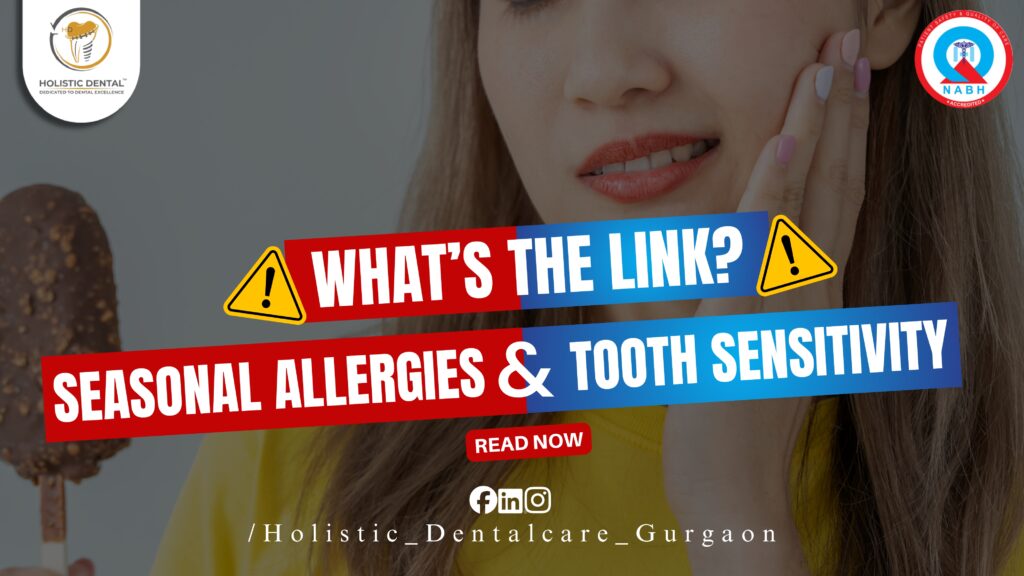
Seasonal Allergies & Tooth Sensitivity – What’s the Link?
Seasonal allergies are common during certain times of the year, especially in spring and early summer when pollen levels rise. Many people experience symptoms such as sneezing, nasal congestion, itchy eyes, and headaches. However, one lesser-known symptom that some people experience during allergy season is tooth sensitivity.
If you notice that your teeth feel more sensitive or painful during allergy season, you’re not imagining it. There is actually a connection between seasonal allergies and dental discomfort.
How Seasonal Allergies Affect Your Teeth
Seasonal allergies can cause inflammation and congestion in the sinus cavities, particularly the maxillary sinuses, which are located just above the upper back teeth. When these sinuses become inflamed or filled with pressure due to allergies, they can press against the roots of nearby teeth.
This pressure can make your upper teeth feel sensitive, sore, or painful, even though there may not be a dental problem. Many people mistake this discomfort for a cavity or tooth infection when it is actually related to sinus pressure caused by allergies.
Signs That Your Tooth Sensitivity May Be Allergy-Related
It can sometimes be difficult to tell whether tooth pain is caused by allergies or by a dental issue. However, certain signs may indicate that allergies are the cause:
- Sensitivity mainly in the upper back teeth
- Tooth discomfort accompanied by sinus congestion or headaches
- Pain that increases when bending forward or moving the head
- Sensitivity that appears during allergy season and improves once symptoms reduce
If your tooth sensitivity appears along with typical allergy symptoms, sinus pressure may be the underlying cause.
Dry Mouth During Allergies
Allergies can also contribute to dry mouth, which can increase tooth sensitivity. Many people breathe through their mouth when their nose is congested. This reduces saliva flow in the mouth.
Saliva plays an important role in protecting teeth by neutralizing acids and washing away bacteria. When saliva levels drop, teeth may become more vulnerable to sensitivity, decay, and bad breath.
In addition, some allergy medications, such as antihistamines, can also cause dry mouth as a side effect, further increasing the risk of dental discomfort.
Sinus Pressure vs. Tooth Infection
One important thing to remember is that sinus-related tooth pain usually affects multiple upper teeth at the same time, while dental problems like cavities or infections usually affect one specific tooth.
If the discomfort improves when allergy symptoms reduce, it is likely related to sinus pressure rather than a dental issue. However, persistent tooth pain should always be checked by a dentist to rule out cavities, cracks, or gum problems.
Tips to Manage Tooth Sensitivity During Allergy Season
Here are some simple ways to reduce dental discomfort when seasonal allergies strike:
Stay hydrated: Drinking plenty of water helps prevent dry mouth and supports saliva production.
Maintain good oral hygiene: Brushing twice daily and flossing regularly helps protect teeth from sensitivity and decay.
Use a soft-bristled toothbrush: This prevents unnecessary irritation to teeth and gums.
Manage allergy symptoms: Following your doctor’s advice for controlling allergies can reduce sinus pressure and related tooth pain.
Use toothpaste for sensitive teeth: Specially formulated toothpaste can help reduce discomfort caused by sensitivity.
When to Visit a Dentist
If tooth sensitivity lasts longer than a few days, becomes severe, or occurs without allergy symptoms, it is important to consult a dentist. Early diagnosis can help identify whether the issue is related to allergies or a dental condition that needs treatment.
At Holistic Dental, we believe that oral health is closely connected to overall health. Understanding how seasonal allergies affect your teeth can help you take better care of your smile and prevent unnecessary discomfort. A healthy smile starts with awareness and a little extra care during allergy season can go a long way.