- +91 77888 64446
- A 241,Upper Ground Floor, Supermart 1, DLF Phase 4, Gurugram, India
Sugar & Smiles: The Actual Effect of Sweets on Your Tooth
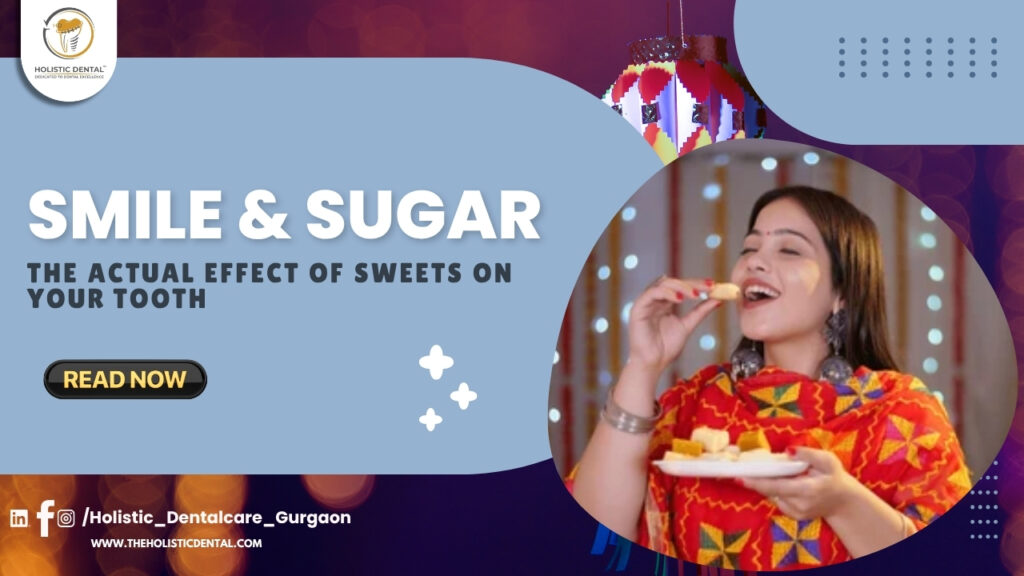
Without sweets, festivals, family meetings and celebrations are not complete. Sweetened delights are also much embedded in our culture with laddoos and barfi being favourite festival delights and a comforting bite of chocolate being a popular treat. On the one hand, they make you happy, cozy, and connected with each other; on the other, there is a darker side of it, and that part influences your oral health in ways that you may not be aware of. Learning about the interaction between sugar and your teeth will make you make conscious decisions about keeping your mouth as bright and healthy as possible.
How Sugar Affects Your Teeth
It is not that sugar causes direct harm to your teeth–the effect it has does. The sugar that you eat is broken down by the natural bacteria in your mouth releasing acids. Gradually these acids erode your enamel, the hard outer coating that covers your teeth. Once the enamel is weakened, cavities and tooth decay will be easier to develop.
Even traditional Indian sweets, sticky sweets such as caramel, and even soft drinks are more likely to remain on the surface of your teeth longer. This provides more time to bacteria to generate acid, thus causing more probable damage. Even such seemingly harmless habits as sipping sweetened tea or eating a biscuit here and there during the day may lead to slow and gradual damage.
Repeated sugar exposure/acid attack may also result in sensitivity, gum irritation and discoloration. In the course of time, the untreated decay can even penetrate the greater parts of the tooth. Although sweets are perceived as innocent pleasures, the lasting impact on the health of the mouth can be drastic unless preventive measures are implemented.
On the contrary, the natural sugars of the fruits act differently. Fruits have fiber and water and therefore are useful in partially washing away some of the sugar in it and saliva production – partial protection. The issue with the added sugars in processed foods and desserts is that they are more problematic because they stick in the mouth and are more difficult to get rid of.
Beautiful Smiling Mindfully.
It is not about avoiding sweets but about how to balance and then when to have them in order to protect your teeth. It is significant to drink sweets with your meals because when you are eating your mouth produces more saliva to neutralize acids and wash sweets leftovers away. In case you cannot brush them off right after eating, just rinsing your mouth with some water will help to minimize the amount of acid and prevent the activity of bacteria.
It is also important to be smart when it comes to your sweets. Hard or sticky sweets, i.e. toffees or sweets with a jaggery basis, adhere to the teeth longer and lead to higher risks of decay, but softer ones, which dissolve quickly, are less dangerous. The number of times you have sweets in a day can count as well – when you snack between meals you leave your mouth at an acidic and when you leave intervals between an indulgence your enamel is able to heal.
The teeth must be taken care of. Washing teeth in the mornings twice a day with fluoride toothpaste makes them very strong and prevent the initial signs of a decay. It is important to remain hydrated all through the day, as this will help in the saliva flow that is naturally helpful in protecting your teeth and clearing food debris. Finally, frequent dental examinations will help you identify any early signs of enamel loss or cavities in their early stages and prevent their progression to more serious problems.
Taking care of your mouth does not imply being deprived of pleasure–it is experiencing it in a wise way. By knowing the impact of sugar on your teeth, you can have every bite in a responsible manner.
Simply put, sweets are an element of celebrations in life, and it is up to your daily habits whether they will harm or benefit your teeth. Daily oral care and moderation and awareness can assist you in finding the right balance. Due to the health of the sweetest of smiles that remain healthy even after the festivities are over.